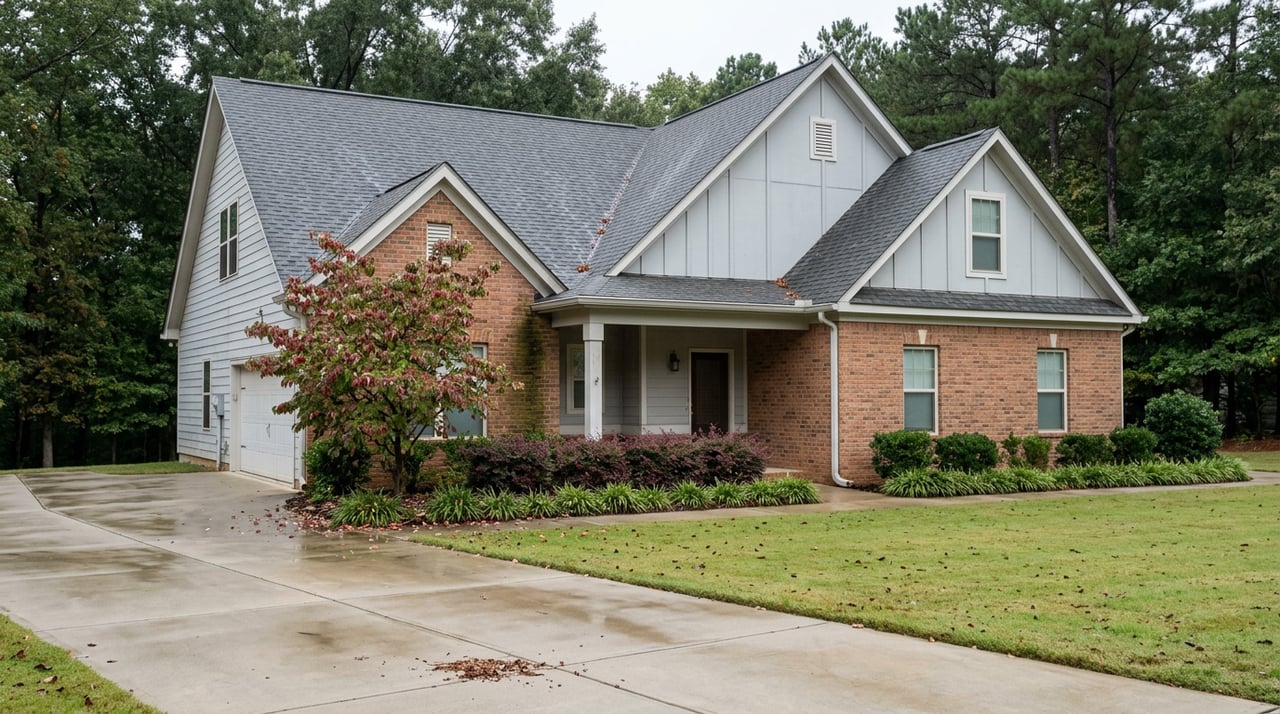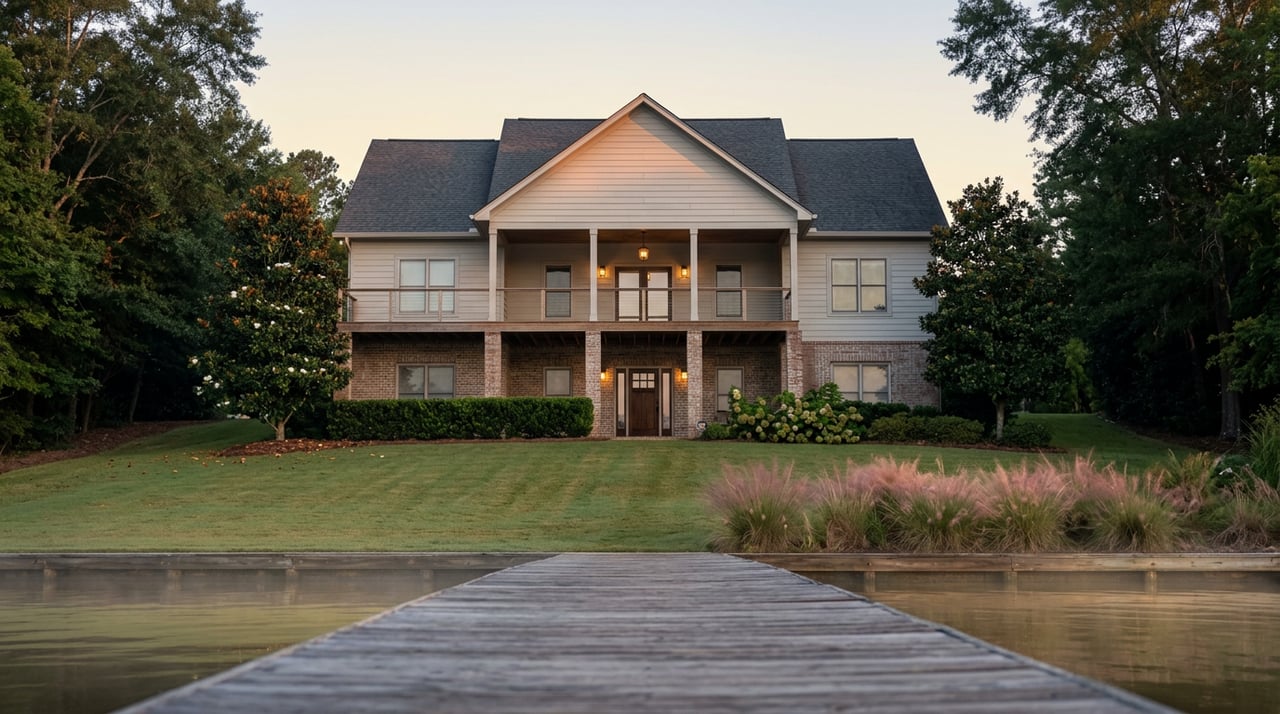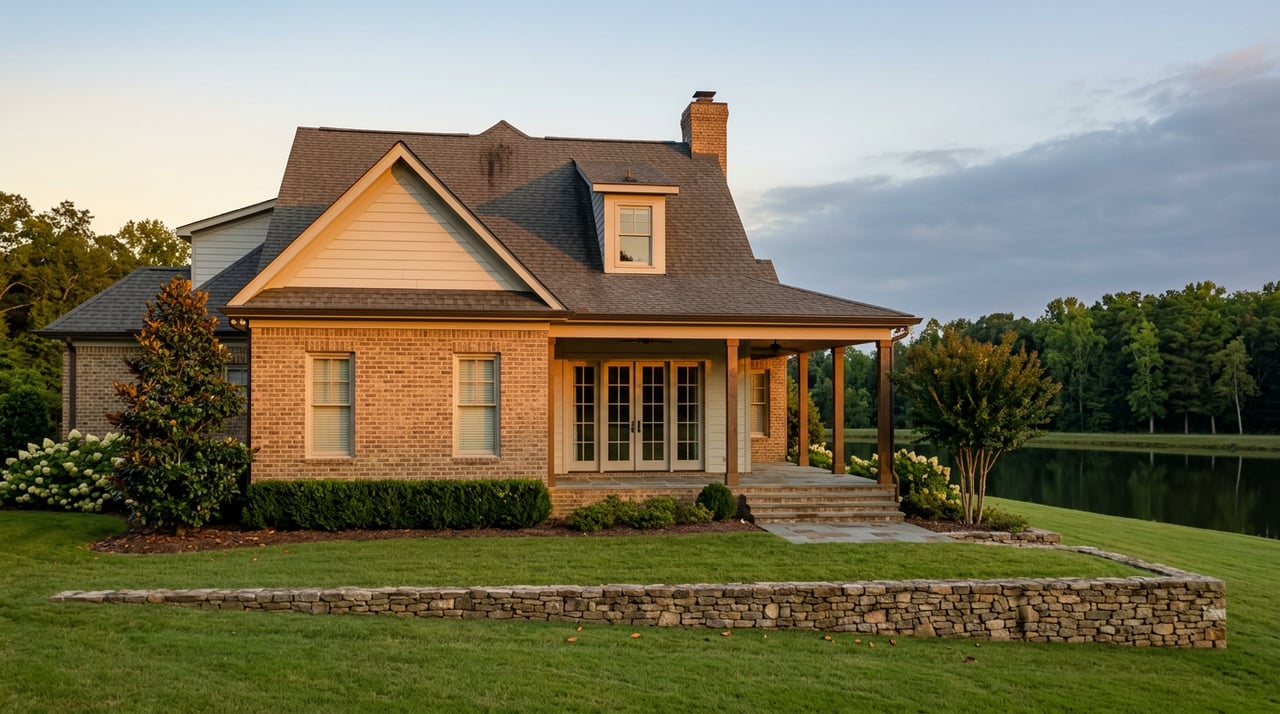
If you have spent any time comparing Smith Lake listings this year, you have probably noticed something odd. Two lots can sit at nearly the same price, both marketed as waterfront, both showing a dock in the photos, and still deliver two completely different lake experiences the moment you actually visit in person. One dock floats confidently no matter the season. The other one sits on exposed mud by January.
That gap is not a marketing accident. It is the result of a premium that gets quoted as a single number when the lake itself is really selling two different products under one label.
The Number Everyone Quotes
A cross-lake analysis of active listings covering 17 Alabama lakes found that Smith Lake carries the highest waterfront premium in the state. Buyers pay an average of $356 per square foot to live directly on the water there, roughly 120 percent more than comparable non-waterfront homes in the same community. No other lake in the analysis came close to that spread.
That number gets repeated often, and for good reason. It is a clean way to explain why waterfront on Smith Lake commands so much more than a similar house a half mile inland. What the number does not tell you is that the premium is not spread evenly across the shoreline. It clusters hard around a specific kind of water, and a lot of listings borrow the label without delivering the thing that actually earns the price.
Two Different Products Wearing One Label
Smith Lake is not a natural lake. It is a reservoir built and managed by Alabama Power, and that detail matters more to a buyer's bottom line than most portal listings let on. Full summer pool sits at 510 feet above sea level. Every fall, Alabama Power draws the lake down to create flood storage ahead of spring runoff, and by winter the water can sit well below that summer mark, in some years by ten to fourteen feet.
Most docks on the lake float on the surface rather than sitting fixed to the shore, which means a dock's usability tracks the water level under it. A lot with real depth in its cove keeps that dock afloat through the winter drawdown. A lot on a shallow slough or a seasonal finger of the lake can leave the same dock resting on dry ground for months.
This is exactly why certain areas of the lake get marketed specifically around depth. Listings in coves like Ryan Creek, Simpson Creek, and Spring Branch routinely lead with language about deep, year-round water, because that is the feature buyers in those areas are actually paying for. A listing that simply says "waterfront" without addressing depth is often quietly signaling the opposite.
Here is the practical difference in plain terms:
| Deep, year-round water lot | Seasonal or shallow water lot | |
|---|---|---|
| Dock access in winter | Floats normally through the drawdown | May sit exposed or grounded |
| Typical marketing language | Named for depth ("deep water cove," specific coves like Ryan Creek or Simpson Creek) | Often just "waterfront" with no depth mentioned |
| Buyer profile it suits | Full-time owners, boaters who use the dock year-round | Weekend owners comfortable with seasonal limits |
| Price relative to lake average | Tends to anchor the top of the $356/sq ft premium | Can carry the same list price without the same utility |
The premium everyone quotes is a lake-wide average. The lots that actually justify $356 a square foot skew heavily toward the left column of that table.
The Shoreline Number That Can Quietly Disqualify a Lot
There is a second variable that shapes what a "waterfront" price tag really means, and it has nothing to do with depth. Alabama Power's own shoreline construction guidelines state that lots with less than 100 linear feet of shoreline may be restricted, or may not be eligible for a dock structure at all.
That is not a negotiable amenity or a matter of taste. It is a hard technical threshold set by the entity that owns the lake bed itself. A buyer who assumes any lot on Smith Lake can eventually support a dock, given enough patience and paperwork, may be working from a false assumption before they ever pick up the phone to ask.
Between the depth question and the shoreline footage question, two listings priced identically can represent very different long-term value. One might support a dock that floats reliably for decades. The other might never legally support a dock at all, regardless of what price the seller is asking for the water view.
Why the Gap Matters More This Year Than It Did in 2022
For several years, Smith Lake's waterfront market moved fast enough that buyers rarely had room to interrogate these details. Inventory was tight, competition was intense, and a lot of purchases closed on the strength of a good photo and a fast decision.
The first quarter of 2026 looked noticeably different. Active waterfront listings on the lake more than doubled compared to the same period the year before, giving buyers more room to compare rather than react. Homes that quarter closed at an average of 87.7 percent of list price, a real step down from the prior year's pace, and the center of transaction activity shifted from the $1 million-plus tier that had carried early 2025 down into the $500,000 to $1 million range.
None of that means the lake cooled off. It means the market moved from a seller's pace to something closer to a genuine negotiation, and negotiation only works when a buyer knows which details are actually worth pushing on. In a market with more listings to choose from and more room to ask questions before writing an offer, the depth and shoreline distinctions covered above stop being trivia and start being leverage.
What to Actually Check Before You Write an Offer
- Ask for the current measured water depth at the end of the dock, not just a general description of the shoreline.
- Confirm which cove or section of the lake the property sits in, and whether that area is known for holding depth through the winter drawdown.
- Get the shoreline footage in writing rather than estimating it from a plat map, since the 100-foot threshold is a real cutoff for dock eligibility.
- Compare the price per square foot against other listings in the same water classification, not against the lake-wide average, since that average blends two very different products.
A Couple of Questions Worth Settling Early
Does every cove on Smith Lake drop the same amount in winter? No. Depth varies significantly depending on whether a lot sits on a point, in a protected cove, or at the back of a shallow slough. The lake-wide drawdown range comes from Alabama Power's overall reservoir management, but the effect on any single dock depends on that specific stretch of shoreline.
Is a deep-water lot always the better financial choice? Not automatically. A buyer planning weekend use only may not need year-round dock access and could reasonably pay less for a seasonal-water lot. The point is not that deep water is always worth the premium. It is that the premium should be evaluated against what a specific lot actually delivers, not against the lake's average listing price.
Smith Lake rewards buyers who ask the right questions before they fall for the view. If you are comparing lots and want a second set of eyes on what a specific price tag is actually buying, from dock depth to shoreline footage to how a particular cove has traded so far in 2026, Jay Barrett has spent 36 years working this lake and the towns around it. Schedule a Free Consultation and get a straight answer before you write an offer.